
Lyophilized Vial vs Pre-Filled Pen: Choosing a Research Format
Nine catalog compounds ship as vials, five as pens. The choice is about flexibility versus consistency, not quality.
Published 2026-09-18 · APX Labs Research Desk · For laboratory research context only — not medical advice.
Vials give maximum flexibility — you choose concentration, solvent and aliquot size — and the best long-term stability. Pens give fixed concentration (or fixed ratio for blends), no reconstitution step, and consistency across a series. Testing and documentation are identical for both.
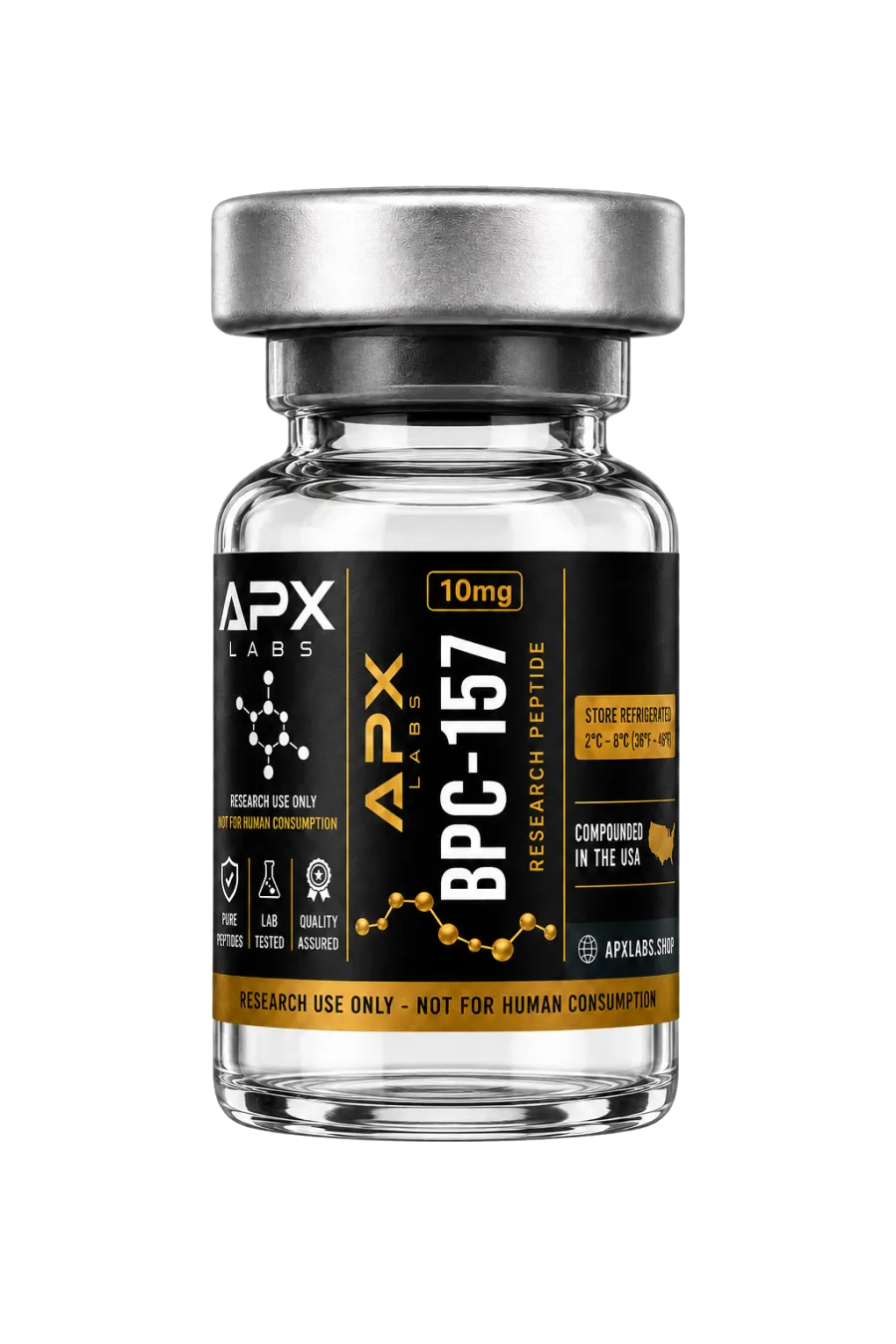
Lyophilized vials
The compound is freeze-dried in a sealed vial. Before use the researcher reconstitutes it in a chosen solvent at a chosen volume.
Advantages: the lyophilized cake is the most stable form a peptide can take — months at −20 °C — so vials suit stocking and infrequent use. Concentration is under the researcher's control, as is the solvent (bacteriostatic water, sterile water, or a buffer), and the solution can be aliquoted for single-use freezing. They are also the lower-cost format per milligram.
Trade-offs: a reconstitution step, and with it small variability between preparations; a shorter life once in solution.
Vial compounds: BPC-157, TB-500, KPV, CJC-1295, IGF-1 LR3, tesamorelin, Semax, Selank, GHK-Cu. Full catalog →
Pre-filled research pens
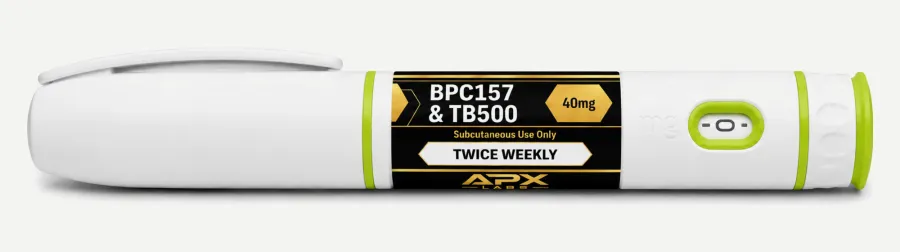
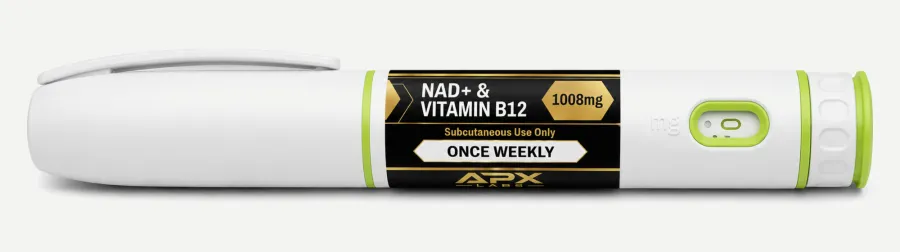
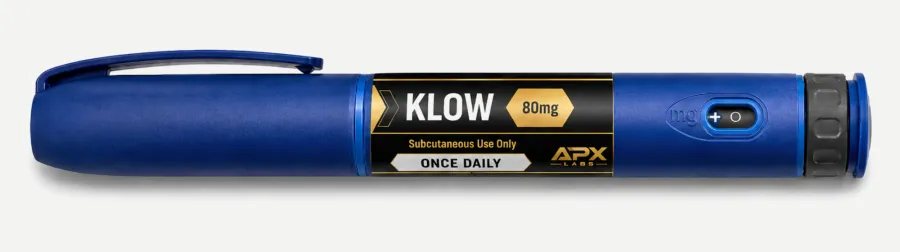
The compound is already in solution in a sealed, refrigerated pen.
Advantages: no reconstitution; identical concentration every time, which matters for series where preparation variance is unwanted; for blends, a fixed ratio between components that would otherwise have to be re-measured for every preparation. The pen format is why the multi-compound products exist at all.
Trade-offs: concentration is fixed; the solution must stay refrigerated and never be frozen; shelf life is shorter than a lyophilized vial's; higher cost per unit.
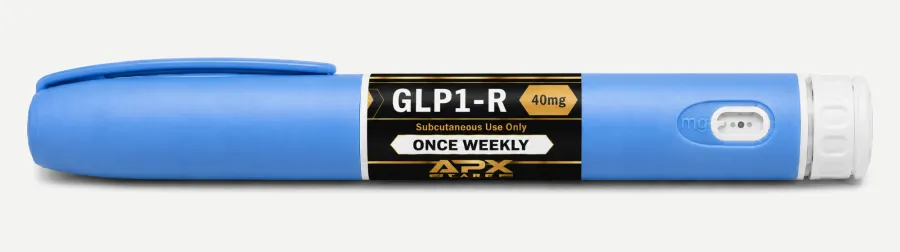
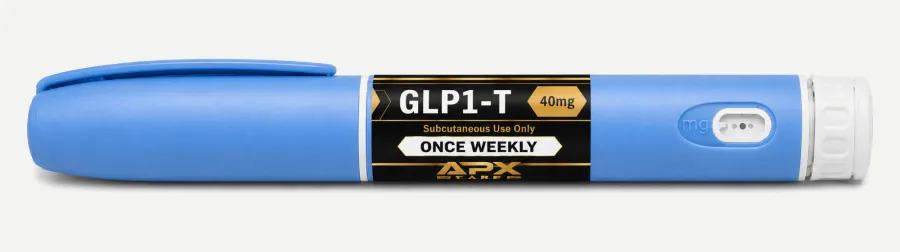
Pen compounds: BPC-157 & TB-500 blend, NAD+ & B12, KLOW, GLP1-R, GLP1-T.
Same testing either way
Both formats go through the same independent HPLC/MS testing and ship with a batch-specific COA; for pens, each component is reported. Format changes handling, not documentation. See how we test.
Deciding
- Need to vary concentration or ratio? Vial.
- Long storage before use? Vial.
- Fixed preparation across a long series? Pen.
- A blend at a constant ratio? Pen.
- Lowest cost per mg? Vial.
Format guidance for laboratory handling only. APX Labs products are for research use only.
Frequently asked
Are pens or vials higher quality?⌄
Can a pen be frozen to extend its life?⌄
Why are the blends only available as pens?⌄
Compounds mentioned
Keep reading
- BPC-157 vs TB-500: What the Research Actually ComparesThe two most-requested recovery-category peptides are structurally unrelated and studied through different pathways. Here is the side-by-side, with sources.
- How to Read a Peptide Certificate of Analysis (COA)Every APX Labs order ships with a batch-specific COA. This is how to read it — and how to tell a real one from a decorative one.
- How to Reconstitute Lyophilized Peptides for Laboratory UseLyophilized peptides arrive as a dry cake in a sealed vial. Turning that into a solution of known concentration is simple, but the details protect the material.
Ready to start your research?
Third-party tested. COA-backed. Shipped discreetly. For research use only.